

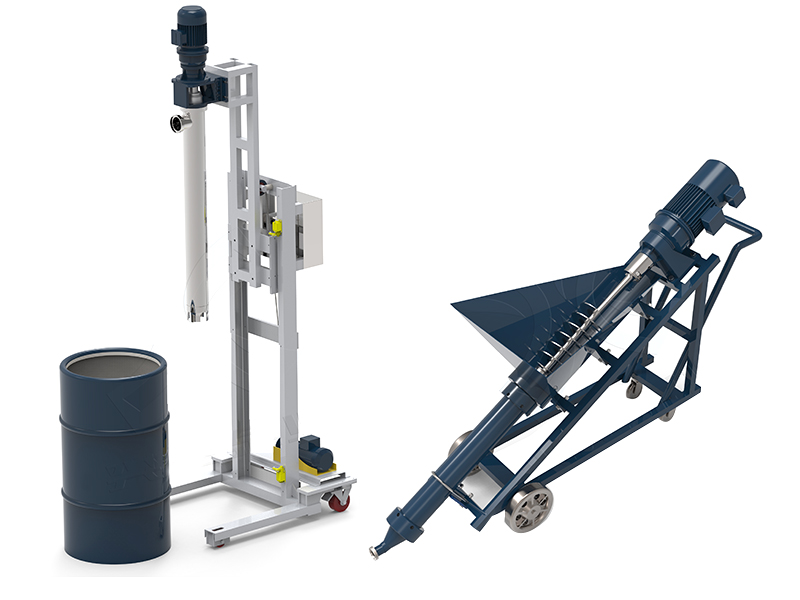
Stainless steel has become the dominant material for modern screw pump construction in demanding industries. From food processing and pharmaceuticals to chemicals, wastewater, and offshore applications, stainless steel screw pumps deliver a unique combination of durability, hygiene, and efficiency. This comprehensive guide explores why stainless steel is so widely used, how it improves screw pump performance, and what engineers, buyers, and plant operators need to know when specifying stainless steel screw pumps.
Screw pumps, sometimes called Progressive cavity pumps (for single screw designs) or multi-screw pumps (for twin and triple screw designs), are positive displacement pumps that transfer fluids using one or more screw-shaped rotors. As the screws rotate, sealed cavities move fluid from the suction side to the discharge side at a nearly constant flow rate.
Screw pumps are valued for their ability to handle:
Common types of screw pumps include:
While screw pumps can be manufactured from cast iron, carbon steel, and various alloys, stainless steel has become the material of choice for many critical installations.
Stainless steel is a family of iron-based alloys containing at least 10.5% chromium. The chromium forms a thin, invisible, self-healing oxide layer that provides corrosion resistance. For screw pump construction, stainless steel offers an ideal balance of mechanical, chemical, and hygienic properties.
In stainless steel screw pump construction, different components may be manufactured from various stainless grades depending on the duty:
| Component | Common Stainless Grades | Key Requirements |
|---|---|---|
| Pump housing / casing | 304, 316, 316L, duplex 2205 | Corrosion resistance, pressure containment, weldability |
| Rotors / screws | 316, 316L, 17-4PH, duplex, super duplex | High strength, wear resistance, dimensional stability |
| Shafts | 316, 316L, 410, duplex | Torque transmission, fatigue resistance |
| Seal housing / gland | 316, 316L | Corrosion resistance in seal chamber environment |
| Fasteners | 304, 316 | General corrosion resistance, mechanical integrity |
Corrosion resistance is one of the primary reasons stainless steel is preferred for screw pump construction. Pumps in industries such as chemicals, petrochemicals, food, and wastewater are constantly exposed to aggressive media that can quickly degrade standard materials.
| Process Fluid | Typical Application | Recommended Stainless Types (Indicative) |
|---|---|---|
| Salt solutions (brine) | Food processing, desalination plants | 316, 316L, duplex 2205 |
| Organic acids | Food, beverage, chemical production | 304, 316, 316L (depending on concentration) |
| Caustic solutions (NaOH, KOH) | CIP systems, cleaning lines | 304, 316, duplex (temperature dependent) |
| Wastewater with chlorides | Municipal and industrial treatment | 316, 316L, duplex for high chloride content |
| Light chemical solvents | Chemical and pharmaceutical plants | 304, 316, special alloys for strong solvents |
The corrosion resistance of stainless steel extends the service life of screw pumps, especially in continuous-duty and critical processes. Reduced corrosion means:
In sanitary industries, stainless steel screw pumps play a crucial role in maintaining product quality and regulatory compliance. The smooth, non-porous surface of stainless steel is easy to clean and sterilize, making it ideal for handling food, beverages, and pharmaceuticals.
| Industry | Typical Fluids | Hygienic Requirements |
|---|---|---|
| Food and beverage | Dairy products, sauces, fruit purees, syrups | CIP/SIP capable, polished surfaces, FDA compliant elastomers |
| Brewing and distilling | Wort, mash, yeast slurry, spirits | Low shear, cleanable design, stainless steel wetted parts |
| Pharmaceutical | Active ingredients, creams, gels, suspensions | High purity surfaces, traceability, sterilization compatibility |
| Cosmetics and personal care | Lotions, shampoos, toothpaste, emulsions | Hygienic construction, resistance to complex formulations |
Surface roughness directly affects cleanability and product adhesion. For stainless steel screw pump construction, typical internal finishes include:
Electropolishing can further improve corrosion resistance and cleanability by smoothing microscopic surface features and enhancing the passive oxide layer.
Stainless steel combines corrosion resistance with good mechanical strength, making it suitable for critical rotating components in screw pumps. The material can withstand the stresses imposed by torque transmission, pressure differentials, and cyclic loading.
Austenitic stainless steels like 304 and 316 offer good toughness and ductility, while precipitation-hardened and duplex grades provide higher yield strength and hardness, which can be important for rotors and shafts.
| Grade | Type | Typical Yield Strength (MPa) | Typical Tensile Strength (MPa) | Typical Hardness (HB) |
|---|---|---|---|---|
| 304 | Austenitic | 200–230 | 500–700 | 150–190 |
| 316 | Austenitic | 200–240 | 500–700 | 150–200 |
| 316L | Austenitic (low carbon) | 170–220 | 480–680 | 140–190 |
| 17-4PH | Precipitation hardened | 800–1100 | 1000–1300 | 280–380 |
| Duplex 2205 | Duplex | 450–550 | 620–880 | 200–270 |
Screw pump shafts and rotors are subject to cyclic stresses during operation. Stainless steels, especially duplex and precipitation-hardened variants, provide good fatigue performance when properly designed and manufactured. The combination of corrosion and fatigue resistance is critical in many industrial environments.
Stainless steel wear resistance can be enhanced by:
Stainless steel supports a wide operating temperature range and is compatible with many chemicals used in processing and cleaning.
Austenitic stainless steels like 304 and 316 maintain toughness and corrosion resistance at both low and moderately high temperatures. For screw pump applications, this enables handling of:
Stainless steel is compatible with many standard cleaning agents, such as:
Proper grade selection and control of concentration, temperature, and exposure time are essential to avoid surface damage.
Stainless steel is highly workable, allowing manufacturers to design and produce complex screw pump geometries while maintaining high-quality surface finishes and tight tolerances.
Choosing the right stainless steel grade for screw pump construction involves balancing corrosion resistance, mechanical properties, cost, and regulatory requirements. The following table summarizes commonly used grades.
| Grade | Type | Key Features | Typical Use in Screw Pumps |
|---|---|---|---|
| 304 / 1.4301 | Austenitic | Good corrosion resistance, economical, widely available | Housings, non-wetted components, structural parts |
| 304L / 1.4307 | Austenitic (low carbon) | Improved weldability, reduced carbide precipitation | Welded casings, hygienic designs with extensive welding |
| 316 / 1.4401 | Austenitic | Higher pitting resistance, molybdenum alloyed | Wetted parts, rotors, housings in chloride environments |
| 316L / 1.4404 | Austenitic (low carbon) | Excellent weldability, widely used in sanitary service | Sanitary Screw Pumps, food and pharmaceutical applications |
| Duplex 2205 / 1.4462 | Duplex | High strength, excellent chloride stress corrosion resistance | High-pressure housings, offshore, aggressive media |
| Super duplex (e.g., 2507) | Super duplex | Very high pitting resistance, high strength | Severe offshore, brine, and high-chloride applications |
| 17-4PH / 1.4542 | Precipitation hardened | High strength, hardness, and good corrosion resistance | Rotors, shafts, high-load components |
| 410 / 1.4006 | Martensitic | Good hardness and wear resistance, moderate corrosion resistance | Wear parts, some shafts in less aggressive media |
Stainless steel screw pumps are used across a wide spectrum of industries where corrosion resistance, hygiene, and reliability are crucial.
The following generic specification table outlines typical ranges and options often seen in stainless steel screw pump offerings. Exact values depend on specific designs, standards, and applications.
| Parameter | Typical Range / Option | Notes |
|---|---|---|
| Flow rate | From a few L/h up to several hundred m3/h | Depends on pump size, speed, and screw geometry |
| Differential pressure | Up to 48 bar or higher in multi-stage designs | Higher pressures possible with specific construction |
| Viscosity range | 1 to >1,000,000 cP | Well-suited for high-viscosity media |
| Temperature range | -20°C to +150°C or more (grade-dependent) | Special materials and elastomers extend range |
| Material (wetted parts) | 304, 316, 316L, duplex, super duplex, 17-4PH | Selection based on process fluid and conditions |
| Connections | Flanged, threaded, tri-clamp, aseptic | Depends on industry and standard requirements |
| Sealing options | Mechanical seals, lip seals, packed glands | Single, double, or cartridge seals for critical duty |
| Drive configuration | Close-coupled, bearing frame, vertical or horizontal | Available to suit installation constraints |
| Compliance standards | Hygienic standards, pressure vessel codes, ATEX (where required) | Depends on installation location and industry |
While carbon steel, cast iron, and non-metallic materials can be used for screw pumps, stainless steel offers a unique combination of performance benefits.
| Criteria | Stainless Steel | Carbon Steel / Cast Iron | Non-Metallic (e.g., Plastics) |
|---|---|---|---|
| Corrosion resistance | High in many environments | Limited; prone to rust and chemical attack | Good in select chemicals, but not universal |
| Mechanical strength | High, especially with duplex and PH grades | High, but can suffer from corrosion | Generally lower; limited for high-pressure duty |
| Temperature capability | Wide range; suitable for hot and cold | Good, but corrosion risk increases at high temperatures | Often limited to moderate temperatures |
| Hygienic suitability | Excellent when properly finished | Poor for sanitary applications | Variable; some can be approved but less common |
| Wear resistance | Good with appropriate grade and surface treatment | Good initially, but corrosion can accelerate wear | Generally poor against abrasion |
| Cost of material | Higher upfront | Lower initial cost | Varies; some polymers are low cost |
| Total life-cycle cost | Often favorable due to long life and low maintenance | Can be high due to corrosion-related failures | Dependent on chemical and mechanical limitations |
To fully benefit from stainless steel in screw pump construction, several factors must be considered early in the design and selection process.
Although stainless steel screw pumps may have a higher upfront cost, their life-cycle economics are often favorable due to reduced maintenance and extended service life.
With appropriate grade selection and installation, stainless steel resists general corrosion, minimizing the incidence of:
To maintain performance and longevity:
Using stainless steel in screw pump construction aligns with many sustainability objectives:
Stainless steel has established itself as a leading material for screw pump construction due to its combination of corrosion resistance, hygiene, mechanical strength, and design flexibility. In industries where process reliability, product purity, and long-term cost efficiency are critical, stainless steel screw pumps provide robust and versatile solutions.
By carefully selecting the appropriate stainless steel grade, surface finish, and screw pump configuration, engineers and plant operators can optimize performance, minimize maintenance, and achieve compliance with stringent industry standards. As processes become more demanding and regulations tighten, stainless steel will continue to be a key material in the design and construction of high-performance screw pumps.
```

Copyright ? Jiangsu Longjie Pump Manufacturing Co., Ltd.



 Phone
Phone
Comment
(0)